Walletconnect app is a one-SDK gateway from wallets to 80K+ onchain apps
Walletconnect app is a decentralized connection layer that lets a crypto wallet link securely with onchain apps through the WalletConnect SDK, QR codes, deep links, and session approvals. Its strongest use is simple: one wallet integration opens access to a broad app ecosystem while users keep approval inside their own wallet. WalletConnect reports 700+ wallets, 80K+ apps, 20+ node operators, and hundreds of millions of connections across the network.
The SDK turns a wallet into an app browser without building every integration separately
Wallet teams use WalletConnect because every exchange, NFT marketplace, lending app, bridge, game, and payments page does not need a custom wallet connector. The SDK gives developers a common transport for pairing, session creation, message signing, and transaction requests. Once the wallet supports the protocol, the same connection pattern works across many apps that already speak the same standard.
This matters most for mobile and hardware wallets. A mobile wallet needs to talk to a browser app, a desktop web page, and sometimes another device. A hardware wallet needs a companion interface that sends signing requests without exposing private keys. Walletconnect app fits that workflow by separating the app screen from the signature decision, so the wallet remains the place where the user reviews and approves.
What happens when a user taps WalletConnect on an onchain app
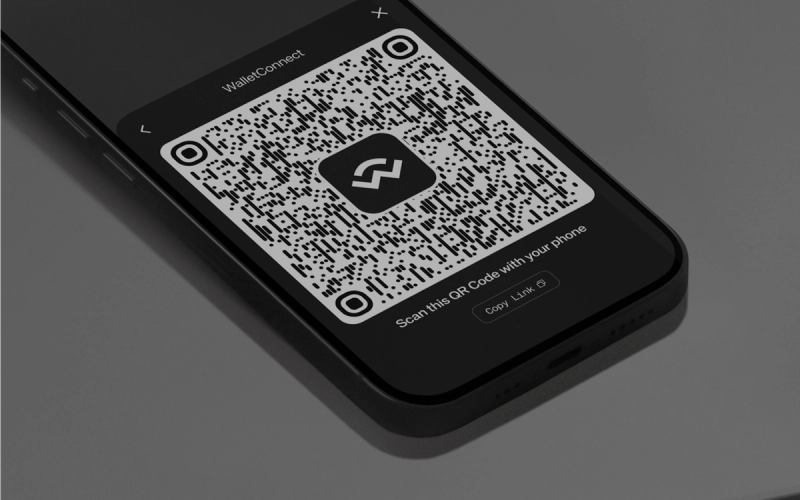
A connection starts with pairing. On desktop, the app displays a QR code; on mobile, it opens a deep link or shows a wallet selector. The wallet reads the request, presents the app identity, requested chains, accounts, and permissions, then creates a session after approval. From that point, the app sends structured requests through the network, and the wallet answers only after the user signs or rejects the action.
The flow feels familiar because it resembles signing into a site, yet the important step is transaction intent. Connecting does not equal spending. Spending, swapping, minting, bridging, and contract approvals arrive as separate prompts. Walletconnect app is valuable because it keeps those prompts inside the wallet interface rather than scattering approval logic across every app a user visits.
Chains, wallets, and app categories in the WalletConnect ecosystem
The network spans a large onchain surface rather than a single blockchain. Ethereum and EVM networks are common, and modern wallets also use WalletConnect for multichain experiences that include assets, NFTs, swaps, bridges, staking dashboards, identity tools, and portfolio apps. The same pattern supports custodial wallets, self-custody wallets, mobile wallets, browser wallets, and hardware-wallet companion apps.
WalletGuide adds a quality layer to that ecosystem by listing wallets that meet WalletConnect standards for security, features, usability, and overall app experience. It is useful when a user wants a wallet that already handles connection prompts cleanly, displays transaction details well, and supports the networks they actually use. Walletconnect app works best when the wallet UI is clear, because the protocol delivers the request but the wallet experience determines whether the user understands it.
Where WCT fits into staking, fees, rewards, and governance
WCT is the native token of the WalletConnect Network. The official role of the token is network security and coordination through staking, rewards, fees, and governance. That gives the connectivity layer an economic model around participation rather than leaving the protocol as a simple app-to-wallet bridge with no network-level incentive structure.
Governance matters because WalletConnect is infrastructure used by wallets, apps, chains, foundations, and node operators. Token-based voting gives stakeholders a formal path to influence network parameters and future direction. Staking aligns participants with network reliability, while fees and rewards create a mechanism for sustaining decentralized service providers.
Developers care about technical overhead, not only user convenience
The official positioning for builders is direct: one integration gives access to a large app ecosystem with far less technical overhead. That is a serious benefit for wallet teams because every extra connector brings testing, maintenance, security review, mobile behavior differences, and support burden. A shared protocol reduces duplicated work across the industry.
For app developers, the advantage is reach. Supporting WalletConnect means users arrive from many wallets without the app needing to prioritize one browser extension or one mobile wallet. A DeFi interface, NFT tool, payments app, or staking dashboard gains a recognizable connection option that already exists inside wallets people use every day.
First connection steps for a new wallet user
The first session is straightforward when the user starts from the app they want to use and keeps the wallet open for approvals. A typical desktop-to-mobile connection follows this sequence:
- Open the onchain app and choose WalletConnect from the wallet options.
- Scan the QR code with a compatible wallet or select the wallet from a mobile link.
- Review the app name, requested network, account, and session permissions.
- Approve the session only if the wallet shows the expected app and chain.
- Confirm each later swap, transfer, mint, or approval as a separate wallet prompt.
Walletconnect app does not remove the need to read a transaction. It gives the user a consistent place to review the request. The single most important habit is checking contract approvals before granting token spending permissions, especially when a new app asks for broad access to an asset balance.
Common workflows: swaps, bridges, NFTs, staking, and payments
Swaps are the most common visible use case. A user connects a wallet to a decentralized exchange, selects a token pair, and receives a wallet prompt with the transaction details. Bridges work similarly, but the request includes source and destination chain context. NFT marketplaces use the connection for listing, buying, minting, and signing off-chain messages related to account ownership.
Staking dashboards and governance pages use the same session model for vote signing, delegation, token locking, and reward claims. Payments apps use it to request a transfer from the wallet instead of asking the user to paste an address. Walletconnect app supports these workflows because the protocol handles the app-wallet conversation while the chain executes the transaction.
Connection risks are mostly about approvals, spoofed apps, and unclear wallets
The protocol is infrastructure; the risky moment is the decision a user makes inside a wallet prompt. A malicious site imitates a known app, asks for a token approval, or pushes a signature that gives it control over an asset. A weak wallet interface makes that worse by hiding the spender address, contract method, or chain details.
Stronger wallets present the app identity, network, account, asset, amount, and approval scope in plain language. That is why WalletGuide and wallet quality matter. Walletconnect app creates the route between app and wallet, but the wallet's transaction screen carries the user's final decision.
MetaMask, Coinbase Wallet, native browser connectors, and WalletConnect
In practice, WalletConnect is not the only way to connect to an app. Browser extensions such as MetaMask inject a provider directly into the browser, which works smoothly on desktop for EVM apps. Coinbase Wallet supports its own app experience alongside WalletConnect compatibility. Some chains also have native wallet adapters that target a specific ecosystem.
The differentiator is breadth across device types and wallet categories. QR pairing helps desktop apps talk to mobile wallets. Deep links help mobile apps move the user into the wallet for signing. Hardware-wallet companion apps use the protocol to keep signing separated from the connected website. Walletconnect app earns its place when users move across devices, chains, and wallet types instead of staying inside one browser extension.
What to look for before choosing a compatible wallet
A good WalletConnect-compatible wallet shows clear session details, supports the chains the user needs, and handles repeated app prompts without forcing confusing reconnections. It should display token approvals distinctly from simple transfers, show readable transaction data when available, and make disconnecting old sessions easy. WalletGuide gives users a starting point for judging that experience.
Developers should judge wallets by support quality as well as connection success. Reliable deep links, stable QR pairing, session persistence, chain switching, and understandable error states all affect whether users complete swaps, payments, bridges, or governance actions. The protocol provides the shared rail; polished wallet behavior turns that rail into a smooth product experience.
Frequently asked questions about Walletconnect app
Does using the Walletconnect app cost gas by itself?
Creating a WalletConnect session does not create an onchain transaction, so the connection step itself does not pay blockchain gas. Gas appears when the connected app asks the wallet to submit a transaction, such as a swap, transfer, bridge, mint, approval, staking action, or claim. The wallet shows the network fee before signing, and that fee is paid in the gas token for the selected chain.
Can I disconnect an old WalletConnect session from my wallet?
Yes. Most compatible wallets include a connected apps, sessions, or WalletConnect area where active sessions appear. Disconnecting ends that app's current communication channel with the wallet. It does not automatically revoke token approvals already written onchain, because approvals are blockchain transactions. Those approvals need to be reviewed and revoked through the relevant wallet feature or approval-management tool.
Why does a WalletConnect QR code expire before I scan it?
QR codes expire to prevent stale pairing requests from staying open indefinitely. If the code expires, refresh the connection screen in the app and scan the new code with the wallet. Expiration also happens when a mobile deep link opens the wrong wallet, the browser blocks the handoff, or the phone loses network connectivity during the pairing step.
Is Walletconnect app the same as a crypto wallet?
No. Walletconnect app refers to the connection layer and app workflow around WalletConnect, while the wallet is the software or hardware tool that holds accounts and signs requests. The protocol carries messages between the onchain app and the wallet. The wallet remains the place where the user chooses accounts, reviews session permissions, signs messages, and approves transactions.
Recovering access if a WalletConnect session stops working
A broken session is normally fixed by disconnecting the app in the wallet, clearing the connection on the website, and pairing again with a fresh QR code or deep link. If the wallet account itself is inaccessible, session recovery does not restore funds. Account recovery depends on the wallet's own recovery method, such as its seed phrase, passkey system, cloud backup, or hardware device.