Walletconnect is the SDK path from one wallet build to 80K onchain apps
Walletconnect is a connectivity layer that lets a crypto wallet connect with onchain apps through one integration instead of a custom bridge for every app . Its practical angle is the wallet developer workflow: add the SDK, support secure session pairing, route users into DeFi, NFT, payment, and governance interfaces, and rely on a network used by hundreds of wallets and tens of thousands of apps.
One integration turns a wallet into an app launcher
The strongest reason wallet teams care about Walletconnect is reach. A new wallet does not need to negotiate separate connection logic with every exchange interface, lending market, NFT marketplace, staking dashboard, or token governance portal. The SDK gives the wallet a standard way to request, approve, and maintain sessions with apps across the broader onchain ecosystem.
That matters for product design. A wallet that connects cleanly becomes more than a place to view balances. It becomes the user's signing surface for swaps, bridging flows, mints, DAO votes, token approvals, and checkout-style crypto payments. The app still handles its own transaction logic, while the wallet presents the user with the account, chain, message, and transaction details that require approval.
The session flow a user actually sees
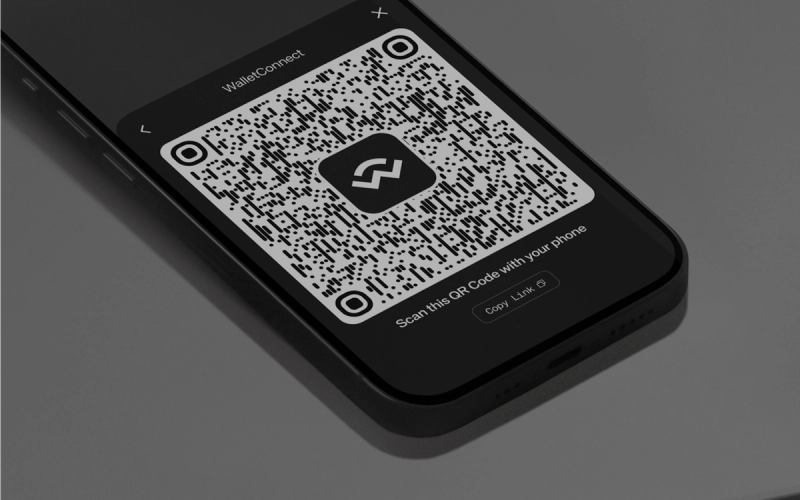
A typical connection starts when an app shows a QR code or a mobile link. The user opens a compatible wallet, scans or taps, reviews the requested accounts and chains, and approves the session. After approval, the app sends transaction or message requests to the wallet. The wallet displays the details and signs only after the user confirms.
This pairing model works across desktop browsers, mobile browsers, native apps, and hardware-wallet flows when the wallet supports them. Walletconnect does the connective work between surfaces that otherwise have different operating-system rules, browser limitations, and deep-link behaviors. The visible experience should feel simple: choose wallet, approve connection, sign the requested action, and return to the app.
Where the SDK reduces engineering overhead
Wallet teams spend less time rebuilding connection plumbing and more time refining account security , recovery, asset display, and transaction clarity. The official positioning emphasizes access to 80K+ apps with dramatically less technical overhead, which is valuable for lean teams that need ecosystem coverage before they have a large integrations staff.
- Session pairing for QR codes, mobile links, and app-to-wallet handoffs
- Account and chain permission handling before requests reach the signer
- Message and transaction request delivery between apps and wallets
- Support for many wallet categories, including mobile, hardware, self-custody, and custodial wallets
- Network infrastructure backed by 20+ node operators rather than a single application server
The SDK is not a substitute for wallet security work. A team still needs clear signing screens, phishing-resistant UI, transaction simulation where available, and careful handling of seed phrases or passkeys. The integration solves connectivity, while the wallet remains responsible for how safely it presents decisions to the user.

WalletGuide and Certified focus on wallet quality
WalletGuide gives the ecosystem a directory of onchain wallets measured around user experience, security, features, and overall quality. That is useful because connection support alone does not make a wallet trustworthy or pleasant. Users judge the whole path: onboarding, supported chains, confirmation screens, NFT display, recovery options, and how the wallet behaves when an app asks for broad permissions.
The Certified program adds a clearer benchmark for teams that want to signal strong implementation standards. For builders, this creates a product target rather than a vague compatibility badge. For users comparing wallets, it turns a crowded category into something easier to scan without treating every logo in a connection modal as equivalent.
WCT ties network participation to staking and governance
WCT is the native token of the WalletConnect Network. Its stated role covers staking, rewards, fees, and governance, which places the token around network operation rather than a simple app coupon. Staking helps secure participation, rewards compensate network contributors, fees support network economics, and governance gives token holders a route to vote on protocol decisions.
This token layer matters most to people who run infrastructure, participate in governance, or evaluate the network's decentralization path. A normal wallet user connecting to an app does not need to start with token mechanics. The everyday workflow is still about connection approval and transaction signing, while WCT sits behind the network incentives and decision process.
Payments, DeFi, NFTs, and DAO actions use the same connection rail
Once the session exists, very different onchain tasks travel through the same approval pattern. A user might connect a wallet to a Uniswap-style swap interface, an Aave-style lending market, an NFT marketplace, a token claim page, or a governance voting app. Each app builds its own action, and the wallet signs only the request the user accepts.
That shared rail is why broad wallet compatibility matters. Onchain apps compete on liquidity, fees, design, assets, and chain support, but users expect their preferred wallet to appear wherever they go. Walletconnect gives app developers a familiar path to many wallets and gives wallet developers a direct route into the app ecosystem.
The strongest fit is wallet teams, not only app teams
App developers benefit from broad wallet coverage, yet the alternate angle for this page is the wallet-side value. A wallet that supports reliable sessions becomes immediately useful across a large map of crypto activity. That shortens the distance between a new account and a real action such as swapping a token, staking through a dashboard, signing into a community tool, or paying from a mobile wallet.
Institutional wallets and custodians also fit this pattern when they need controlled access to onchain apps. Their priority is not only connection volume; it is policy, review, and predictable signing flows. The same network that supports self-custody mobile wallets also gives more controlled wallets a standard way to reach apps while preserving their approval model.

Getting a first connection right
A good first setup starts with a compatible wallet, an app the user recognizes, and a narrow permission request. The user should look at the app domain, selected account, chain name, and requested action before approving. After the session is active, the wallet's connected-apps screen should let the user disconnect stale sessions without hunting through settings.
Developers need the same discipline in their implementation. Connection prompts should appear only when the user is taking an action, not as a blocker on page load. Chain switching should be explicit. Failed deep links need clear recovery paths, especially on mobile where the user jumps between browser and wallet. Walletconnect works best when the integration respects attention instead of treating connection as a background detail.
Alternatives depend on the surface you are building
Browser-extension wallets use injected providers for many desktop flows, and some ecosystems have native connection standards tied to a specific chain or wallet family. Coinbase Wallet, MetaMask, Phantom, Ledger Live, and other major wallets also provide their own user experiences around connection and signing. Those routes remain important, especially where a single wallet or chain dominates a user base.
The reason Walletconnect keeps showing up beside those options is breadth. It is built for a multi-wallet, multi-app environment where the user may start on desktop, sign on mobile, and return to the original interface. For a wallet team, that breadth turns connectivity into a reusable layer rather than a long queue of one-off partnerships.
Frequently asked questions about Walletconnect
Can a connected app move funds after I approve a session?
Approving a session lets the app request signatures; it does not automatically approve every future transaction. Funds move only after the wallet signs a valid transaction that authorizes the action. Token approvals deserve extra attention because they grant spending permission to a smart contract. Review the token, chain, contract request, and amount before signing approval or swap transactions.
Fees on Walletconnect connections: who pays them?
The connection itself is separate from blockchain gas. When a user signs an onchain transaction, the wallet pays the network fee required by that chain, such as ETH on Ethereum or SOL on Solana. The WalletConnect Network also has WCT-linked fee mechanics at the infrastructure level, but those are distinct from the gas a user sees before submitting a transaction.
Do I need WCT to connect a wallet to an onchain app?
A normal user does not need WCT just to approve a wallet connection or sign a transaction request. WCT belongs to the network's staking, rewards, fees, and governance design. The user-facing connection flow relies on a compatible wallet and app session. Token participation matters more for people who stake, vote, run infrastructure, or study the network's economics.
How long does a Walletconnect session stay active?
Session length is controlled by the wallet and app implementation, so the visible behavior differs across products. Many wallets keep a connected app available until the user disconnects it or the session expires under that wallet's rules. Users should review the connected-apps area inside their wallet and remove old sessions after completing a swap, mint, vote, or payment.